

1. Triage – Your Fortnightly Rundown
Hi Pulse Readers - this week, we’re diving into:
the RNZCGP trialling AI simulated consultations for registrar training,
what a 1,584-scan RCT shows about AI-assisted ultrasound for fetal brain malformations,
and how Heidi's three building blocks work: Context, Transcript, and Note.
There is still one more Heidi Remote to be won by one lucky new subscriber. Our August & September giveaway closes tonight, and the winning subscriber will be announced in the next issue of The Pulse on 14th October.
Now, on to this week’s issue...
2. Case Study – Your Fortnightly Practical
Video Source: Supercharge your ACC Contract work webinar with Josh Wilks, Hendrix Health
Heidi Quickstart Guide
Case Presentation: Last time, Dr Harry edited a template's structure with syntax, so Heidi writes his notes in his own style.
This week, a fellow colleague who recently joined the practice is just starting out with Heidi. They are confident clinically, but keep coming to Dr Harry with small questions. They cannot seem to picture how Heidi works, what goes in, how it listens, and what comes out.
Dr Harry remembers his own first weeks with Heidi. He decides the clearest way to explain it is to follow a single consultation through Heidi's three main building blocks: Context, Transcript, and Note.
Approach: Walk a new user through the three most important tabs that serves as the building blocks of a Heidi session.
Start in the Context tab
Context is everything relevant that is not said out loud during a consultation. Before the consult, add what you need to write the note - the referral, a recent specialist letter, previous notes, or blood/imaging results. Type it in directly, or upload files with the paperclip, including PDFs, Word documents, and photographs of handwritten notes.
Add only the relevant information
Load the documents you will actually draw on for this note, and leave out the rest. A large, unfocused upload, such as a 200-page bulk print, can dilute the output because Heidi cannot reliably judge the relevance of contextual information. If you add something after the note is generated, press sync changes so Heidi takes it into account.
Transcribe the visit, and say what you see
Start the session, then let Heidi transcribe into the Transcript tab, which holds the verbatim record of what was captured. Verbalise your examination findings and anything on the screen or in the room; alternatively, you can always hit the "Resume" button and dictate this part into Heidi after the consultation.
Important: Gain the patient's consent before you start transcribing.Let the note generate, then review it
When you stop transcribing, Heidi writes the note in the Note tab from the transcript and everything in Context, following the structure of your template. This note is your primary output. Review it in full and correct anything before it goes into your PMS or EHR.
Generate other documents
Heidi combines this core note with any information added to Context, and turns it into a referral letter, a GP letter, or a patient explainer listed as one of the tasks on the side. You may also use the Ask Heidi chat bar to instruct Heidi exactly what you want to generate.
Outcomes: Dr Harry's new colleague now has a clear picture of how it works. They understand what belongs in Context, how the Transcript captures only what is spoken, and how the Note becomes the main source for every document that follows.
The same three building blocks sit under everything else Heidi Scribe can do, from templates to tasks to referrals and other documents. A clinician who understands what goes in and what comes out gets supercharged by Heidi, and keeps more of their time on the patient and their whānau.
Disclaimer: Hendrix Health is the official New Zealand partner for Heidi Health.
3. The Pulse - Your Fortnightly Update
Royal NZ College of GPs Trials AI Simulated Consultations for Registrar Training
In mid-September 2026, the Royal New Zealand College of General Practitioners began a pilot with Gestalt, a New Zealand-built clinical reasoning platform, trialling AI-supported simulated consultations with a targeted group of GP registrars.
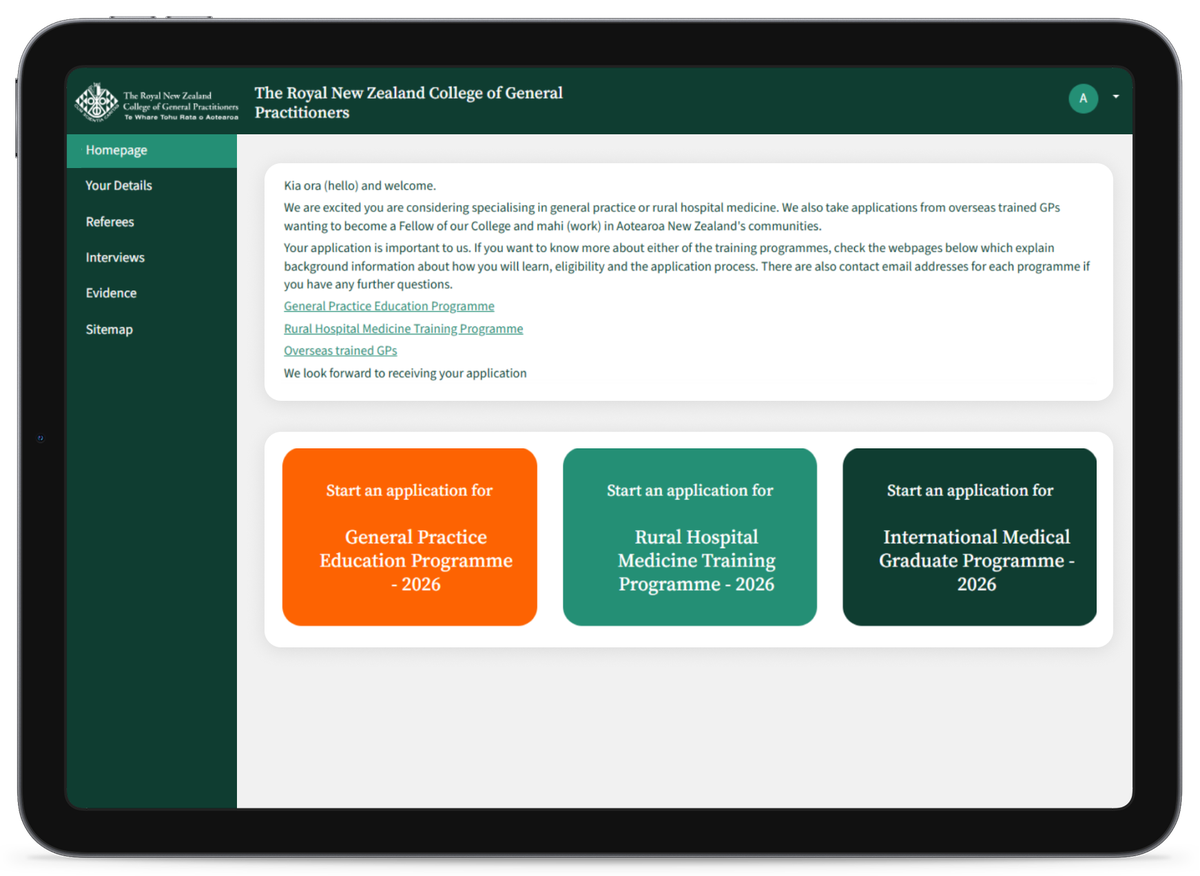
Image Source: RNZCGP
On the platform, a registrar works through a simulated patient consultation, builds the differential diagnosis as the history unfolds, then receives structured feedback on the consultation and the reasoning. Registrars use it between their facilitated small-group sessions, adding practice alongside their educators.
The pilot arrives as Aotearoa works to grow its GP workforce, with 225 doctors having begun specialist general practice and rural hospital medicine training in February 2026. It gives safe, repeatable practice with no risk to a real patient.
Key Features:
Built on a knowledge graph: Gestalt’s platform runs on a proprietary medical knowledge graph of around 3,000 conditions and more than 500,000 interlinking terms, with a New Zealand Formulary partnership keeping feedback in curated clinical content
Extended for specialist training: moving from undergraduate use to registrars meant longer consultations, with assessment focused on how a registrar reasons through a case
Educators stay in control: College medical educators review every scenario before release, and an educator overview shows facilitators a group’s learning needs
International Medical Graduates included: IMGs may bring deep clinical experience while still adjusting to New Zealand’s system, referral pathways, and diverse communities
Evaluation before any rollout: the College will assess registrar engagement, user experience, and educator feedback before deciding on any wider role in training
Implications for the Health System and Clinicians: For clinicians and educators in Aotearoa, what stands out is where the College has drawn the line. Gestalt is a place to practise, while real patient care and clinical judgement stay with people. The trial is deliberately small and closely supervised, and the College will evaluate it before taking it any further. The harder question is cultural: a simulated Māori patient must not become a stereotype, so the scenarios and the data behind them need checking for bias, with Māori data sovereignty protected. Educators will also be watching the feedback itself, because AI can sound convincing while being wrong. Whether it genuinely sharpens clinical reasoning, and helps produce safer, more culturally responsive doctors, is what the pilot still has to show.
AI-Assisted Ultrasound Improves Detection of Foetal Brain Malformations: What a 1,584-Scan RCT Shows
A multicentre randomised controlled trial in The Lancet Digital Health tested whether real-time AI support helps sonographers detect fetal brain malformations during pregnancy scans. Run across five tertiary centres in China, it evaluated PAICS, a deep-learning system trained to flag ten specific intracranial malformations as the scan happens.

Image Source: The Lancet
The self-crossover design let each sonographer act as their own comparison: 29 sonographers with three to under eight years of experience scanned high-risk pregnancies both with and without AI, four weeks apart. Senior specialists reviewing the videos set the reference standard. Across 1,584 scans at 11 to 32 weeks, the team measured how many malformations were caught (sensitivity) and how often normal scans were cleared (specificity).
Key Findings:
More malformations caught: With AI support, sonographers’ sensitivity for the ten brain malformations rose from 78.6% to 87.3%, a gain of 8.7 percentage points (p<0.0001).
Fewer missed per condition: Judged malformation by malformation, sensitivity rose from 69.6% to 81.4%, up 11.8 points (p<0.0001), with specificity holding steady.
No tunnel vision: Detection of anomalies outside the AI’s scope held up, and specificity for other brain malformations improved by 1.9 points (p<0.0001).
Clinicians stayed in charge: Sonographers overrode most of the AI’s mistakes, 64% of its false positives and 59% of its false negatives, while rarely overturning its correct calls, with no adverse events reported.
Implications for Healthcare Systems:
For New Zealand, this is rare randomised evidence that AI can lift diagnostic performance during live scanning while keeping the sonographer in control. Where fetal anomaly scanning leans on a stretched sonographer workforce, a tool that helps less-senior operators catch more without adding false alarms is worth watching. However, some caveats are that the trial ran only in China, in high-risk pregnancies rather than routine screening. So independent trials in general screening and more diverse populations are the next test.
Read the full study here.
4. Vitals – Quick Bytes
New Zealand Study Builds Equity-Focused AI to Prioritise Complex Older Patients
A New Zealand machine-learning study built REACH, an AI tool that sorts older patients into complex or non-complex care pathways. It draws on routine hospital records and interRAI (a standard older-person needs assessment), aimed at fairer care for Māori and Pasifika. Trained on seven years of Health NZ Waikato data (over 650,000 patient episodes), REACH picked the more complex patient correctly about 81% of the time. When it flagged someone as complex it was usually right (about 94%), though it was deliberately cautious and did not catch every complex case. The caveat being that this is an early proof-of-concept from one district, not yet a live tool, and needs real-world testing.
AI-Guided Ultrasound Speeds DVT Diagnosis in London Hospital Pilot
Chelsea and Westminster Hospital in London has piloted ThinkSono Guidance, an AI tool for assessing suspected deep vein thrombosis (DVT), a potentially life-threatening leg clot. It lets non-specialist clinicians run a handheld ultrasound with real-time AI guidance, while a sonographer or radiologist reviews the images remotely and makes the diagnosis. Over a three-month pilot, clinicians completed 120 scans and ruled out DVT in 97, usually within 30 minutes, discharging 80% of patients after the first scan. Recently FDA-cleared, the tool could help ease the sonographer shortage. The caveat: these are single-site pilot figures, with the Trust exploring wider use.
Heidi Launches Heidi II Today, an Agentic Layer for Clinical Work
Heidi, the AI documentation platform, has launched Heidi II, an agentic layer that carries out the work around a visit. This extends Heidi from writing notes to completing tasks. It opens on the clinician's day with patient context loaded, runs agents and “computer use” that operate a keyboard and mouse across systems with healthcare guardrails, remembers clinician preferences, and supports clinicians in their decisions with full-text peer-reviewed evidence with inline citations. Clinical judgement stays with the clinician - Heidi completes tasks and brings them back for explicit sign-off before anything reaches a chart or patient. The functionality will be rolled out gradually over the coming months.
You can sign up to watch the launch keynote live stream tonight at 9 pm NZST here.
We’d love to hear your thoughts, so join the conversation by leaving a comment below:

Stay tuned for more insights in the next edition of The Pulse.
Have a great day & see you in two weeks!
Your Hendrix Health Team