

1. Triage – Your Fortnightly Rundown
Hi Pulse Readers - this week, we’re diving into:
a New Zealand-built AI cardiac imaging platform scaling across Australia's largest private cardiology network,
what a 143,000-admission study reveals about predicting inpatient hypoglycaemia 24 hours ahead,
and how to go about setting up Heidi Comms to handle routine patient calls.
2. Case Study – Your Fortnightly Practical
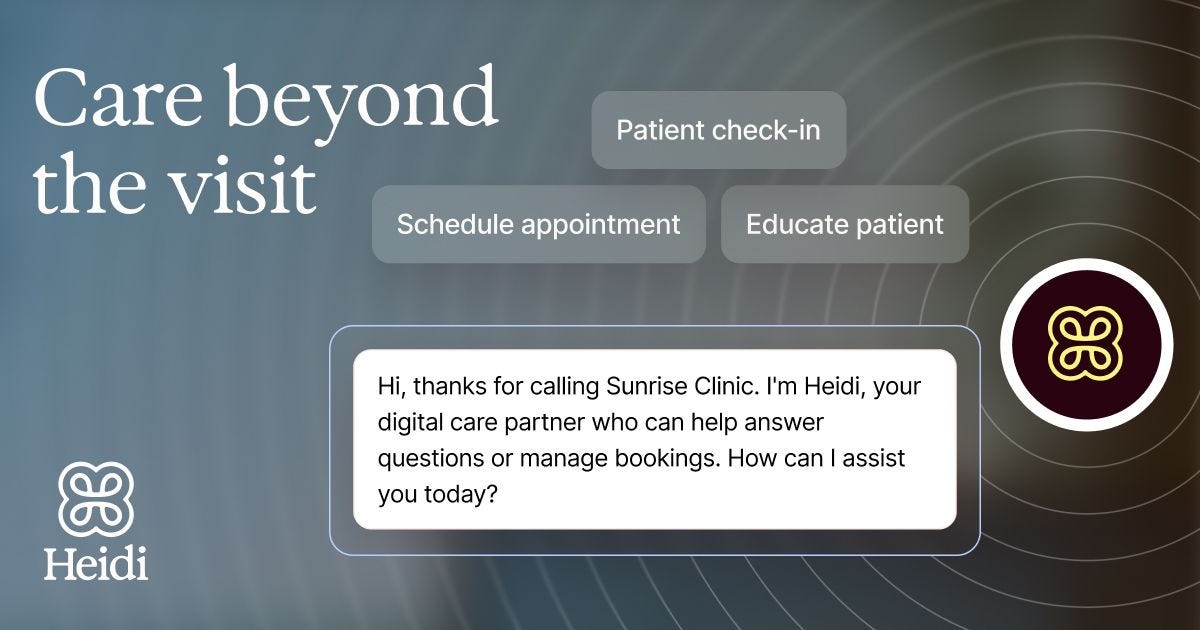
Image Source: Heidi Health
Setting Up an AI Agent to Handle Routine Patient Calls
Case Presentation: This fortnight, the pressure is at the front desk rather than in Dr Harry’s clinic room.
Reception is dealing with a constant stream of calls: bookings and reschedules, results, and repeat prescriptions. Calls are missed over lunch and after hours, and patients tell Dr Harry they cannot get through. The practice manager raises it at the practice meeting.
They wonder whether an AI Voice Agent can handle routine calls, so reception can focus on patients in front of them.
Approach: Set up Heidi Comms - Heidi’s patient communication agent, to answer routine calls, texts and messages, book appointments, and pass anything clinical to your team.
Decide which patient enquiries Heidi will handle first
Start with high-volume, low-complexity calls and messages: new patient enquiries, booking and rescheduling, opening hours and common questions, appointment reminders, and follow-ups for population health campaigns. Agree what must always reach a person, such as anything clinical or urgent.
Prepare your practice information and escalation rules
Gather what Heidi needs to answer accurately: your services, hours, booking rules, and frequently asked questions. Heidi Comms does not give medical advice, so set clear rules for when a caller is transferred to reception.Configure it with the Hendrix Health and Heidi team
Heidi Comms is set up with you using call templates that define the goal of each call, the questions it asks, and how it confirms a caller's identity before going further, with the greeting and tone tailored to your practice. In New Zealand, it integrates with a variety of commonly used PMS tools and it can run without an integration, though some features depend on one.
Test it before going live
Run practice calls through Heidi. Confirm that bookings land correctly in your PMS, that the handover to reception works, and that the written summaries read accurately. Adjust the flow until it fits how your practice works.Review the call logs and keep a person in the loop
Every call is transcribed and automatically summarised in Heidi, so the team keeps full visibility of what was discussed. Review these summaries regularly and follow up on anything flagged for follow-up.
Note: Heidi Comms is currently available to early adopters in New Zealand, with a small number of integrations live and more in progress. It currently operates in English. Practices interested in joining can arrange access through the Hendrix Health team.
Important: Heidi Comms handles communication and leaves clinical decisions to your team.
Outcomes: Instead of a front desk that drops calls when busy and falls silent after hours, the practice now has a first point of contact that answers every call, books appointments, and passes anything clinical to the team. Reception spends less time on repeat questions and more with patients.
For patients, it means reaching the practice when they need to, including outside opening hours. For Dr Harry, fewer interruptions reach his room, and patients arrive booked into the right appointment.
Disclaimer: Hendrix Health is the official New Zealand partner for Heidi Health.
3. The Pulse - Your Fortnightly Update
NZ's HeartLab Rolls Out AI Cardiac Imaging Platform Across Australia's Largest Private Cardiology Network
HeartLab, an Auckland health-technology company, has begun a multi-year rollout of its cloud-based cardiac imaging platform across Advara HeartCare, Australia’s largest private cardiology network. Announced last week, the rollout will reach Advara’s full network of more than 100 clinics, 130 cardiologists, and 160 cardiac sonographers, across five states by the end of the year.
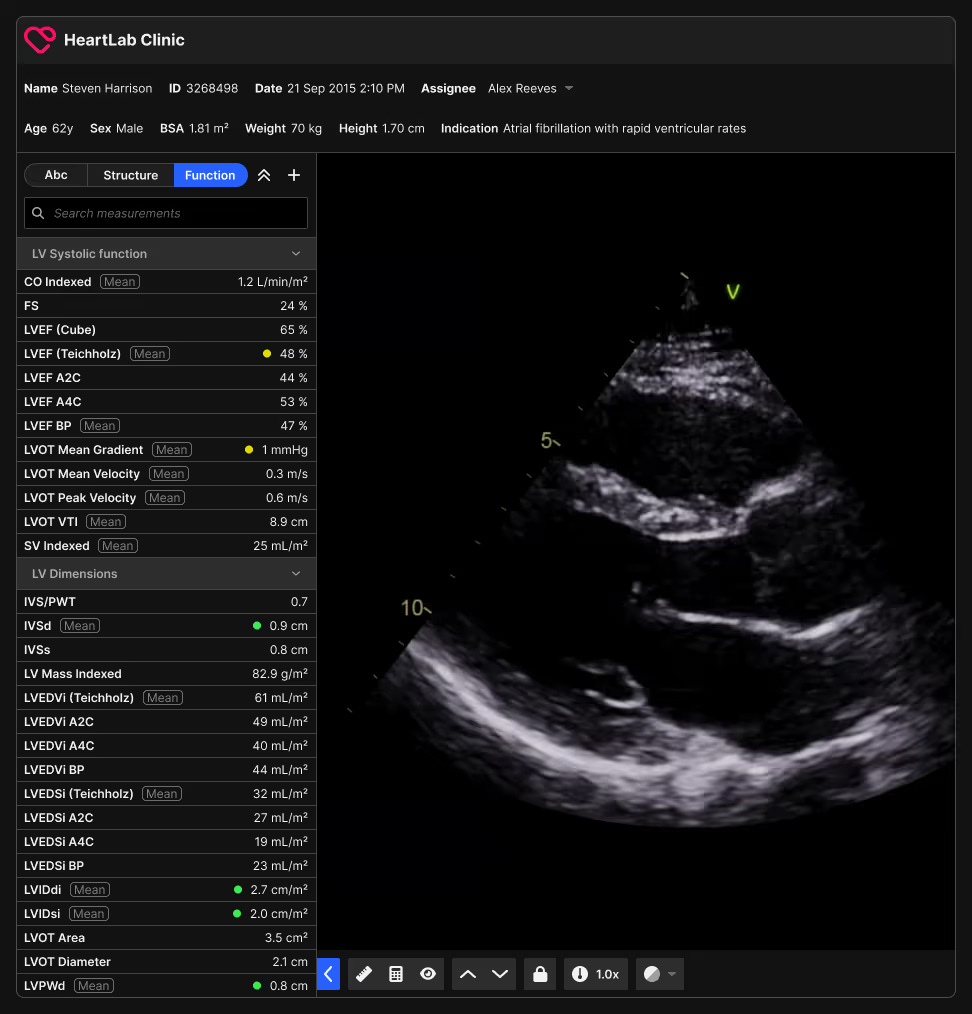
Image Source: HeartLab
When a patient presents with possible cardiac symptoms, they are often referred first for an echocardiogram. HeartLab’s platform stores and shares the study, supports measurement and reporting, and uses AI to speed analysis. Because it runs in a browser, clinicians can review imaging and report from any location, returning results to referrers and patients more quickly.
As its network grew, Advara needed a single platform to standardise reporting across metropolitan, rural, and remote sites.
Key Features:
Cloud-based access: Clinicians can view studies and report from anywhere through a browser, with no software to download, supporting mobile testing and live review in remote areas.
Imaging modalities: The platform stores, views, and shares echocardiography, CT, MRI, and angiography studies, replacing legacy systems at each site.
Selection process: Advara chose HeartLab after a six-month evaluation against around 70 criteria, covering clinical workflow, usability, and reporting consistency.
Scale of use: By company reports, the platform serves around 500,000 cardiac patients a year across New Zealand, Australia, the UK, and the US, with more than 1,000 studies processed daily.
New Zealand footprint: Health NZ Te Whatu Ora has deployed HeartLab in one region so far, with the company expecting broader public-system uptake.
Implications for the Health System and Clinicians: This is an example of AI adding value through operational infrastructure rather than autonomous diagnosis, with gains from faster analysis, standardised reporting, and the ability to review imaging from any location. A New Zealand-built platform can meet the demands of Australia’s largest private cardiology network is also a notable signal for local health technology and cardiac services
The caveat is that reach and patient numbers are company-reported. The claims about reduced risk and mortality rest on faster image access and reporting turnaround, and on provider testimony, rather than independent clinical outcome data. Whether faster reporting translates to better patient outcomes, and whether New Zealand’s public system expands beyond one region, remains to be seen.
Predicting Inpatient Hypoglycaemia 24 Hours Ahead: What a 143,000-Admission AI Study Shows
A study in npj Digital Medicine built and prospectively tested an AI model that predicts inpatient hypoglycaemia up to 24 hours before it happens. A US team at three Cedars-Sinai hospitals in Los Angeles used 143,124 adult admissions from 2014 to 2025, all on a glucose-lowering medication.
The model, a long short-term memory network, learns from how each patient’s data changes over time. Every four hours it reads medications, lab results, diet orders, and meals eaten over the previous five days, then estimates the risk of blood glucose dropping below 3.9 mmol/L (70 mg/dL) within 24 hours. It uses ordinary fingerstick readings, not continuous monitors. Hypoglycaemia occurred in 19% of admissions.
Key Findings:
Predictive accuracy: It flagged about 44% of the hypoglycaemic episodes that followed, and about one in four of its alerts were correct, better than the standard models tested.
Held up live: That same performance held when the model ran in real time on daily records, a step most prediction tools never reach.
Workable alert load: Across the three hospitals, this meant about 16 alerts a day, flagging around 3.6 of the 8 daily hypoglycaemia cases.
Clear reasoning: It showed the factors behind each alert, often modifiable ones like recent insulin or prior lows, and worked evenly across most patient groups.
Implications for Healthcare Systems:
This shows AI making inpatient glucose care proactive rather than reactive, spotting at-risk patients a day ahead. For New Zealand wards, where insulin is a high-alert medicine and inpatient hypoglycaemia a known, preventable harm, a tool using data hospitals already collect is appealing. However, performance is still modest: it misses more than half of events, and most alerts are false. It was also built and tested at one Los Angeles health system over just two and a half weeks, with no trial yet showing it improves outcomes.
Read the full study here.
4. Vitals – Quick Bytes
New Zealand to Lead 24,000-Patient ICU Trial of AI-Guided Oxygen Therapy
A New Zealand-led randomised trial will test whether machine learning can improve survival for patients on life support, backed by a $5 million Health Research Council Programme Grant. The REVOLUTION trial will run across 50 ICUs in New Zealand and Australia and recruit more than 24,000 patients, billed as the first of its kind worldwide to evaluate AI-guided treatment on ICU survival. The team will use machine learning to personalise oxygen delivery, the most widely used ICU therapy, comparing AI-assisted oxygen targeting against standard clinician-led care. The model will first be refined on data from the completed Mega-ROX trial, which enrolled 40,003 patients across 137 ICUs in 14 countries. For now, the trial has only been funded and is yet to begin, so any survival benefit remains unproven.
AI Chest X-ray Reading to Reach Every NHS Trust in England by 2029
AI tools that act as a second pair of eyes for radiologists, flagging possible lung cancer on chest X-rays and pushing urgent scans up the queue, are now live in around half of England's NHS trusts and have supported faster diagnosis or all-clear for more than 4 million patients. Early NHS data shows scans now read in around four days on average, against eight previously for the most complex cases. The government has committed £20 million to extend the tools to every trust by 2029. These figures are government-reported, and the gains so far are in reporting speed - commentators caution that faster reading may not shorten overall diagnosis if downstream CT, biopsy and clinic capacity stays the bottleneck, with radiologists central to the read. (gov.uk)
We’d love to hear your thoughts, so join the conversation by leaving a comment below:

Stay tuned for more insights in the next edition of The Pulse.
Have a great day & see you in two weeks!
Your Hendrix Health Team